
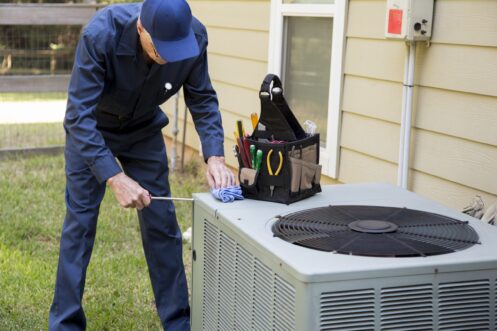
Wondering if your AC fan motor has gone bad? The most reliable signs are: the fan won’t spin while the compressor runs, it spins slowly or only intermittently, it makes a screeching or rattling noise, it keeps running after the system shuts off, or the AC repeatedly trips the breaker. Because the fan not spinning can also be caused by a failed start capacitor (a cheaper fix) or worn bearings, the true cause is confirmed with a multimeter continuity test on the motor windings — a diagnosis best left to an HVAC technician, since testing a charged capacitor can cause a serious shock.
The condenser fan is located in the outdoor AC unit and is an essential part of an AC system. While this fan usually lasts for at least 10 years, its motor can end up wearing out before the outdoor unit itself fails.
If the motor does wear out and the fan no longer spins, it can lead to numerous issues and potentially cause major damage. Here, we’ll explain what role the fan serves and the signs that can help you know if the fan motor is bad and you need to have it replaced by a local AC repair professional.
Understanding the Role of an AC Condenser Fan
The condenser fan serves two important and interrelated purposes. When the system is running, the fan continually pulls air into the outdoor condenser unit so that it constantly blows over the condenser coil. As the air blows over the coil, it absorbs heat from the refrigerant flowing through the coil so that it quickly cools down and its pressure decreases.
If the fan isn’t working or isn’t drawing in enough air, the refrigerant pressure and temperature will remain much too high for the AC system to cool effectively. The heat and high pressure can also result in the compressor overheating and triggering the thermal protection switch, causing the compressor to shut down. Even though the compressor should shut down if it overheats, there’s still a chance it may get damaged. Overheating has the potential to damage electrical components as well.
Signs That Your Condenser Fan Motor Is Worn Out
You may notice that your AC is putting out warm air or not cooling as effectively as it normally does. If so, one thing you should do is go outside and check to see if the condenser fan is spinning. If you can hear the compressor running but the fan isn’t spinning, the next step is to go back inside and shut your AC off at the thermostat.
You then want to go back outside and check to make sure the fan blades aren’t obstructed by a stick or anything else. You can also check if the fan is obstructed by using something like a screwdriver to see if you can get the fan blades to spin.
Watch for these warning signs that point to a worn-out fan motor:
- Fan won’t spin while the compressor runs — if the blades spin freely by hand but still won’t start with the AC on, it usually means either the fan motor or the start capacitor is bad. The capacitor is essentially a large battery that provides the extra power and torque the fan motor needs to turn on, and the motor won’t start if it fails. Capacitors sometimes last the life of the system, but can fail in as little as five to 10 years — especially if there are electrical issues.
- Fan works only intermittently — this can indicate the fan motor is beginning to wear out, a loose electrical connection, or a damaged wire.
- Fan runs briefly, then stops — if the fan only runs for a short time when the outdoor unit comes on, it almost always means the motor is worn out.
- Fan blades spin slowly — usually a sign the motor is beginning to wear out and will soon fail, though it can also mean worn bearings. If it’s the bearings, you’ll only need those replaced, not the whole motor.
- Fan won’t shut off with the rest of the system — another symptom of worn-out bearings.
- Screeching or squealing noise — a sign the bearings are wearing out. Get the AC inspected as soon as possible or the fan motor could burn out. Replacing the motor isn’t terribly expensive, but it costs quite a bit more than just replacing the bearings.
- Loud rattling noise — can be caused by loose components, but can also signal the fan motor is wearing out.
- AC frequently trips the breaker — can be a general electrical issue, but can also mean the fan motor is wearing out and drawing too much power.
How Professionals Test for a Bad Fan Motor
Unless you’re an electrician, an HVAC technician or otherwise have extensive knowledge of electrical equipment and wiring, it’s extremely difficult to test the fan motor to determine if it’s worn out. Also, the issue may lie elsewhere.
When professionals are trying to diagnose condenser fan issues, they perform what’s known as a continuity test. This involves using a multimeter to measure ohms and check the resistance between the white wire and the three other wires. If the resistance is higher or lower than normal, it indicates that there’s an issue with one of the motor’s windings and that the motor is faulty and needs to be replaced.
If the resistance readings are normal, the technician will then move on to testing the capacitor to see if it’s worn out. Testing the capacitor is dangerous and could result in a serious shock if you don’t know what you’re doing and don’t take proper precautions by discharging the capacitor before you touch it.
How Maintenance Can Help Prevent Condenser Fan Issues
The biggest key to avoiding issues with the condenser fan and the rest of your AC system is to have a professional inspect and service the system once or twice a year. When inspecting the system, the technician will usually be able to tell if the fan motor, bearings or capacitor are starting to wear out and could lead to the fan suddenly not running. They’ll also lubricate the bearings and other moving parts as needed to prevent issues from arising.
During the inspection, the technician will look for any other problems that could lead to your AC breaking down or cause a major spike in the amount of electricity it uses as well. This includes things like dirty coils, a malfunctioning blower, a refrigerant leak, loose electrical connections, etc. In general, your AC system will experience fewer issues, work more efficiently and last longer if you make sure to keep it properly maintained.
AC Fan Motor Problems — FAQ
What are the signs of a bad AC fan motor? The fan won’t spin while the compressor runs, spins slowly or intermittently, makes a screeching or rattling noise, fails to shut off with the rest of the system, or causes the AC to trip the breaker.
Is it the fan motor or the capacitor? If the blades spin freely by hand but the fan still won’t start, it’s usually either the motor or the start capacitor. A failed capacitor is a common, less expensive cause — it can fail in as little as 5–10 years, especially with electrical issues.
Why is my AC fan spinning slowly? Slow blades usually mean the motor is beginning to wear out and will soon fail, though worn bearings can cause it too. Bearings alone are cheaper to replace than the whole motor.
Can I test the fan motor myself? It’s not recommended. Technicians confirm a faulty motor with a continuity test across the windings, then test the capacitor — and a charged capacitor can deliver a dangerous shock if it isn’t discharged first.
What happens if a bad fan motor isn’t fixed? The refrigerant stays too hot and high-pressure, the AC won’t cool effectively, and the compressor can overheat — risking damage to the compressor and electrical components.
Contact Us Today
For fast, reliable heating and cooling services in Anoka, MN, Liberty Comfort Systems is the company to look to. Our experienced technicians can repair and service all brands, models and types of HVAC equipment and will help make sure your home is comfortable all summer and winter long.
As a Lennox Premier Dealer, we also offer a range of excellent options if you need to replace your cooling or heating or are looking to upgrade to a more efficient system. If you’re dealing with a bad fan motor or any other problems with your HVAC system, give us a call and we’ll make sure to quickly and correctly fix the issue.
